
How to Prevent Damp
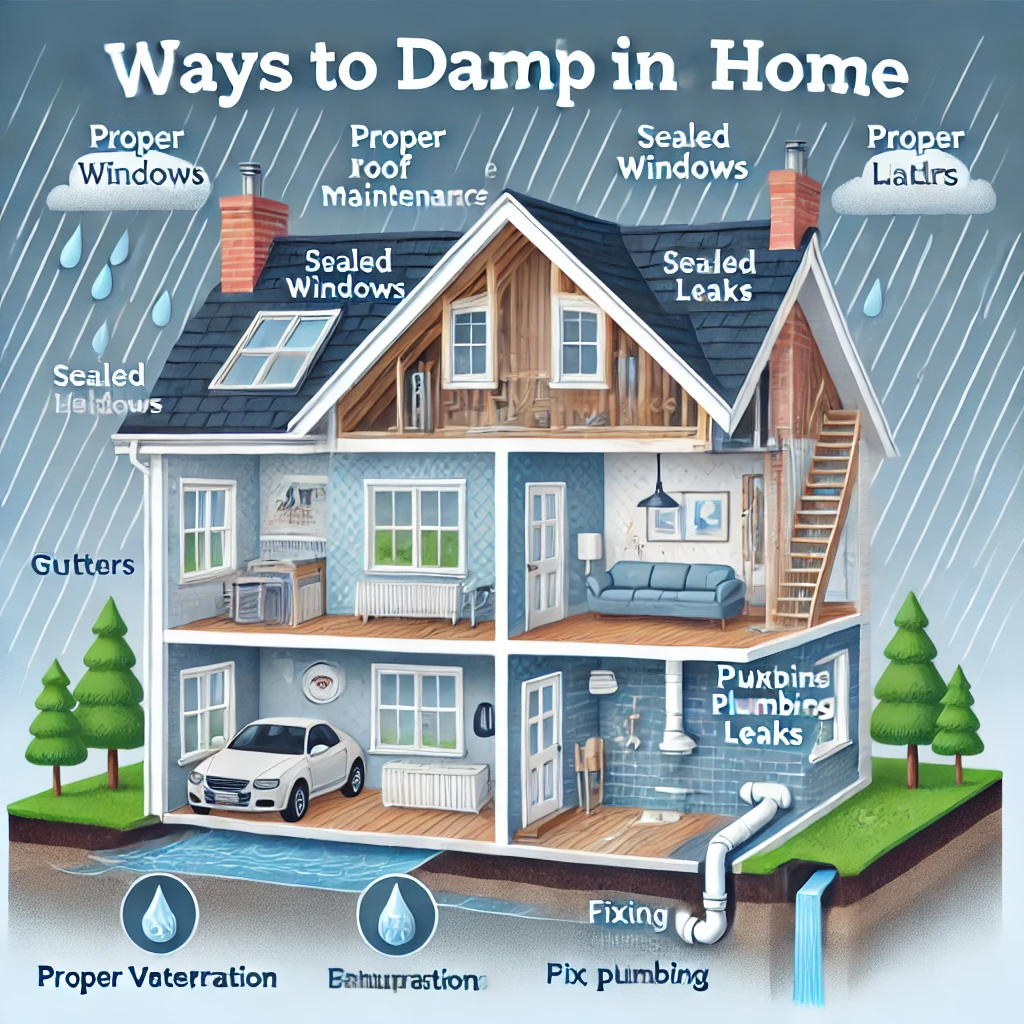
1. Improve Ventilation
- Use Exhaust Fans: Install fans in kitchens and bathrooms to remove steam and moisture.
- Open Windows: Allow fresh air to circulate, especially during and after activities that generate moisture.
- Install Ventilators: Use air bricks or mechanical ventilators to ensure airflow in enclosed spaces.
2. Maintain the Roof and Gutters
- Inspect for Leaks: Regularly check your roof for missing or broken tiles.
- Clean Gutters: Remove debris to prevent water from overflowing and seeping into walls.
- Check Flashings: Ensure roof flashings are secure to avoid water penetration.
3. Waterproof the Property
- Seal Walls: Apply a water-repellent coating to exterior walls.
- Damp-Proof Course: Install or repair a damp-proof course to prevent rising damp.
- Repair Cracks: Fill cracks in walls or foundations to block water entry.
4. Control Indoor Moisture
- Dry Clothes Outdoors: Avoid drying clothes indoors or use a dryer with proper ventilation.
- Use Dehumidifiers: Reduce indoor humidity, especially in naturally damp areas like basements.
- Wipe Condensation: Regularly wipe windows and cold surfaces to remove moisture.
5. Address Plumbing Issues
- Fix Leaks: Check and repair any leaking pipes, faucets, or appliances.
- Monitor Hidden Areas: Look behind appliances or under sinks for signs of damp.
6. Improve Insulation
- Insulate Walls and Windows: Proper insulation reduces condensation and keeps walls dry.
- Double-Glazing: Install double-glazed windows to minimize temperature differences that cause condensation.
7. Regular Maintenance
- Check Basements: Monitor basements or crawl spaces for water seepage.
- Inspect Paintwork: Look for peeling paint or wallpaper as early signs of damp.