Manufacturing Process
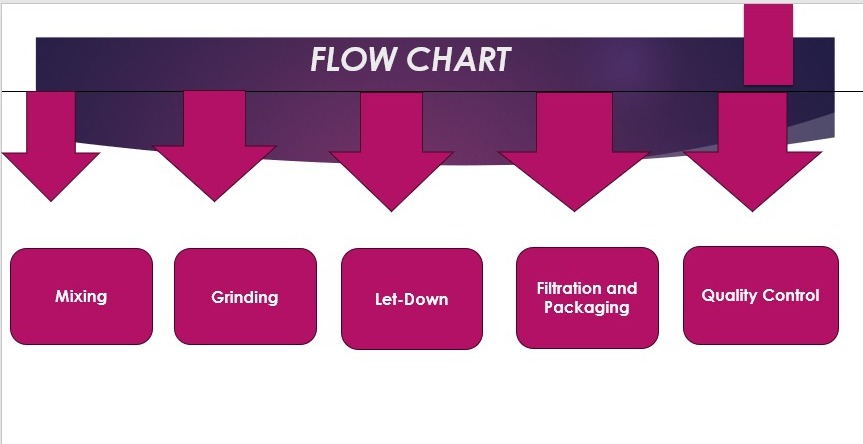
The manufacturing process of paint involves several critical steps, ensuring the final product meets quality, consistency, and performance standards.
1. Mixing
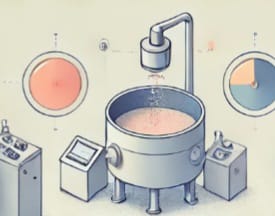
In this step, raw materials like pigments, binders (resins), solvents, and additives are combined in specific proportions.
- Objective: To create a homogeneous mixture that forms the base of the paint.
- Equipment Used: High-speed dispersers or mixers.
- Key Considerations:
- Proper temperature and speed to avoid overheating.
- Ensuring thorough dispersion of all ingredients for consistent quality.
2. Grinding
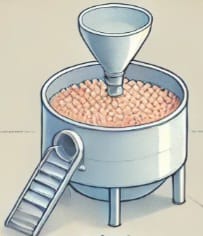
Pigments and other solid materials are ground to achieve a uniform particle size and proper dispersion.
- Objective: To develop uniform color and consistency while improving coverage and performance.
- Equipment Used: Bead mills, ball mills, or sand mills.
- Key Considerations:
- Fine grinding ensures better hiding power and smooth application.
- Avoiding over-grinding, which can alter paint properties.
3. Let-Down
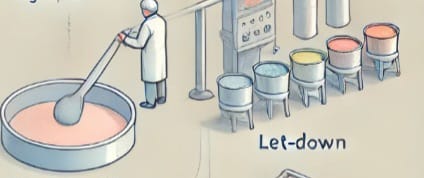
At this stage, the pre-mixed base is combined with solvents, diluents, or additives to adjust the viscosity, color, and final properties.
- Objective: To achieve the desired viscosity and performance characteristics of the final paint.
- Equipment Used: Large mixing tanks or let-down tanks.
- Key Considerations:
- Proper sequence of ingredient addition to avoid clumping or instability.
- Quality checks for viscosity, color, and texture during the process.
4. Filtration and Packaging
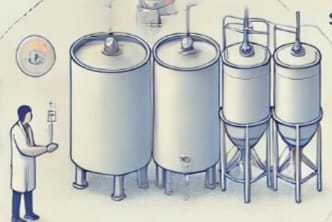
This step ensures that the paint is free from impurities and ready for use.
- Filtration:
- Removes unwanted particles or contaminants.
- Uses fine mesh filters or bag filters for a smooth finish.
- Packaging:
- The paint is filled into cans, drums, or other containers based on its end-use.
- Automated filling machines ensure precise quantity and airtight sealing.
Key Considerations:
- Maintaining hygiene and avoiding contamination during packaging.
- Ensuring labels include necessary information like batch numbers, usage instructions, and safety guidelines.
5. Quality Control
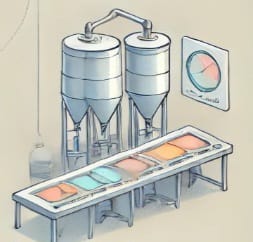
Throughout the process, various tests ensure the paint meets desired standards:
- Viscosity: Checked using a viscometer.
- Color Consistency: Compared to standard samples.
- Drying Time: Monitored for different applications.
- Durability Tests: Resistance to weather, UV light, or chemicals.